|
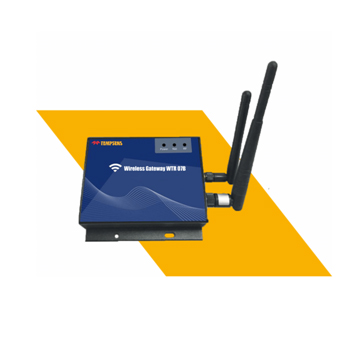
WiFi temperature sensors have become a normal part of modern monitoring systems in 2026. They are no longer limited to industrial setups. You now find them in homes, cold storage units, offices, farms, and data rooms. The main reason is simple. People want real-time temperature data without manual checks.
A WiFi temperature sensor sends live temperature readings to a phone, dashboard, or cloud system. It removes guesswork. It also reduces delays in action when temperature changes quickly. In many cases, this helps prevent damage, spoilage, and system failure.
The shift toward connected monitoring has made these devices more important than ever. Let’s look at the key benefits that explain why adoption continues to grow.
Real-time monitoring without manual checks
Real-time visibility is the best feature. Conventional thermometers require a person to look at the meter and note down the readings. It introduces delays and potential human mistakes.
A WiFi temperature sensor updates data automatically. You can monitor the temperature at any time, from any location, with your phone or laptop. It’s useful if you manage multiple locations or sensitive environments.
Cold storage units, server rooms and laboratories reap the most benefit. Even a slight lag in temperature change detection can ripple in loss. Their risk is reduced by immediate notifications.
Remote access from any location
WiFi temperature sensors eliminate location restrictions. You don’t need to be in the same room to know what is going on.
This will be helpful for the owners of businesses and the facility managers. Temperature over multiple sites can be viewed in a single dashboard. You can check conditions while travelling or working remotely.
It also improves response time. If a freezer warms up at night, you get an alert immediately. You can act before damage spreads.
Better protection for sensitive goods
Temperature control is critical in many industries. Food storage, pharmaceuticals and electronics all depend on stable conditions. A WiFi temperature sensor maintains safe temperatures without having to be watched constantly. You can define a temperature range and the system will notify you on your phone or dashboard if conditions are out of that range.
It is particularly suitable where the right temperature matters (food, drugs, laboratories, server rooms, cold chain logistics). An early alert may save you from spoilage of products, damage to the machinery and wastage of your resources.
It also simplifies compliance for businesses in industries that need to keep proper temperature records and monitoring logs. Because the data are automatically tracked, companies can keep accurate records without having to rely on manual paperwork.
In many respects, a WiFi temperature sensor is like a silent guard that is always working behind the scenes 24/7, constantly monitoring the conditions and notifying you before minor issues become major (and expensive) ones.
Lower operational errors
Manual temperature tracking often leads to mistakes. People forget to record readings or misread values.
Wifi sensors remove that problem. Data is recorded automatically and stored in digital format. This creates consistent records without effort.
It helps during audits, too. You can also present precise historical data rather than paper logs.
Easy integration with smart systems
Today’s Wifi temperature sensor can be linked to the cloud and IoT platforms. This enables automated responses based on data.
For example:
- Activate your cooling system when the temperature rises.
- Send alerts to multiple users at the same time.
- Trigger backup systems during failure.
This automation is much more efficient and requires less reliance on human intervention.
Scalable for multiple locations
A single system can handle multiple sensors over multiple locations. This is helpful for big companies.
Instead of connecting to and managing several different monitoring solutions, you can just connect everything to one dashboard. So, all the sensors are connected to a single dashboard instead of multiple monitoring solutions.
Tempsens wireless temperature sensor technology offers the most advanced monitoring solutions for industry in the UAE and the Gulf region. Their remote temperature sensor solutions are widely used in industries demanding extreme accuracy and reliability.
Thanks to the lower LoRa spread spectrum modulation technology, Tempsens wireless temp sensor solutions can achieve an amazing 1-kilometer range.
Improved safety in critical environments
Temperature fluctuations can create safety risks in industrial and storage environments.
WiFi sensors help detect abnormal changes early. This prevents equipment failure, fire risks in extreme cases and product degradation.
In environments like server rooms or chemical storage, early alerts are essential. Even a small delay can create serious problems.
Reduced energy waste
Temperature monitoring also helps control energy usage.
If systems overcool or overheat, energy gets wasted. WiFi sensors help maintain stable conditions by triggering systems only when needed.
This leads to better energy control over time. It also reduces operational costs in large facilities.
Long-term cost savings
While WiFi temperature sensors require an initial investment, they reduce long-term losses.
Key savings come from:
- Reduced product spoilage
- Lower manual labour for monitoring
- Fewer equipment failures
- Better energy efficiency
Over time, these savings outweigh setup costs.
Useful for both small and large setups
These sensors are flexible. A small café can use one or two devices. A large factory can use hundreds.
The same technology works across different scales. This allows companies to start small and grow later.
Data-driven decisions
Good WiFi temperature sensors collect data incessantly. It makes it easier to identify patterns over time. Today, for instance, you can see:
- Peak temperature hours
- System performance trends
- Repeated fluctuations in specific areas
So owners can better run their businesses. They don’t guess — they base decisions on real data.
The Final Thoughts
WiFi temperature sensors have become necessary tools for personal and commercial use in 2026. They enable real-time monitoring, remote access and enhanced management of temperature-controlled environments.
They also reduce errors, enhance safety and provide potential long-term cost savings. As systems become increasingly connected, their role and importance will only grow across industries.
|














 New
New