













 New
New




Dr. Hassan Elhais Addresses Cross-Border Custody Enforcement At IAFL Symposium
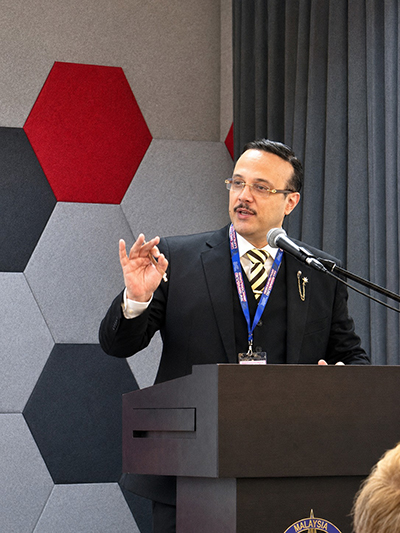
Dr. Hassan Elhais is one of the best family lawyers in Dubai and Abu Dhabi for cases involving children cases, especially those requiring cross-border enforcement of custody. He was elected co-chair of the Relocation of Children Committee of the International Academy of Family Lawyers (IAFL) and he recently spoke on key issues for expatriate families at the IAFL Asia Pacific Symposium in Kuala Lumpur. Dr. Hassan Elhais is a professional lawyer who has developed expertise in dealing with cases that are specific to expats living in UAE including cross-border matters such as parental child abduction and the enforcement of foreign financial judgments. He extensively discussed the challenges of international custody disputes and the proposed improvements to the legal system to assist the families navigating the multiple legal systems.
Navigate UAE law with confidence. Become a part of r/KnowTheLaw —your Reddit group for sharp analysis, strategic advice, and real solutions to complex legal matters.
Dr. Hassan Elhais Presents at IAFL Asia Pacific Symposium in Kuala Lumpur
The IAFL Asia Pacific Symposium was held in Kuala Lumpur, Malaysia on 19 May 2026 and hosted by the Malaysian Bar Council. The event was held ahead of the larger IAFL Asia Pacific Chapter Meeting, which is scheduled for May 20-24, 2026, at the Grand Hyatt Kuala Lumpur.
The Significance of IAFL's Regional Symposiums
The International Academy of Family Lawyers is a worldwide association of practitioners, academics and members of the judiciary who have been acknowledged by their peers as the most experienced and skilled family law specialists in their countries. The IAFL was established almost 40 years ago and has more than 930 fellows in 67 jurisdictions. The organization's mission is to improve the practice of law and administration of justice in the area of divorce and family law globally. The regional symposiums feature international experts and the leading family lawyers to address the new developments and challenges in the cross-border family law field, which provides the legal practitioners with a platform for discussing ideas with their international counterparts.
Dr. Hassan Elhais's Role as Co-Chair of Relocation of Children Committee
Dr. Hassan Elhais has over 18 years of experience as a legal consultant at Amal Alrashedi Lawyers & Legal Consultants, one of the most reputable family law firms in the UAE. He has gained expertise in arbitration, family law, inheritance law and drafting legal documents for clients. He has a diploma in private law including Shariah law, philosophy of laws, litigation law, commercial law and civil law, a Master’s degree in Law and a PhD in Law that was awarded in 2019. His election as co-chair of the Relocation of Children Committee is a reflection of his expertise in matters involving children, especially those with international aspects such as relocation disputes and cross-border custody arrangements.
Key Topics Addressed During the Presentation
The symposium focused on the cross-jurisdictional family law issues, with the professional lawyer Dr. Hassan Elhais presenting on cross-border enforcement of custody in multi-jurisdictional cases. His presentation examined how differently the legal systems treat recognition and the enforcement of foreign custody orders, a matter of great concern for the expatriates living in the UAE with connections to multiple countries.
How Cross-Border Custody Enforcement Works in Multi-Jurisdictional Cases
Foreign custody orders are not automatically enforceable in other jurisdictions. Recognition is a question of local domestic law, comity, reciprocity and res judicata. The United States has no bilateral treaty or multilateral convention with other countries on reciprocal recognition and enforcement of judgments. Therefore, the question of whether a court in a foreign country will enforce a judgment rendered elsewhere is a matter of internal law and international comity.
Foreign states exercise the right to examine foreign judgments for four specific causes: determining if the issuing court had jurisdiction, verifying proper notification of the defendant, establishing whether fraud vitiated proceedings, and confirming the judgment does not contradict public policy of the foreign country. The judgments involving multiple damages or punitive damages face particular difficulty in achieving enforcement abroad.
Enforcement Mechanisms Under International Treaties
The Convention on the Civil Aspects of International Child Abduction of The Hague provides for a common civil remedy between partner countries. Each member country has a Central Authority, which is the primary point of contact for parents and other governments. Documents submitted to Central Authorities together with applications shall be admissible in courts without the usual formalities required for foreign documents.
Challenges Facing Expatriate Families
Custody conflicts can be a distinctive obstacle for expatriate families. The UAE is not a contracting state to the Hague Convention and therefore there is no automatic return mechanism under a treaty. This makes it much more important to act before a child is removed, rather than trying to resolve it after overseas relocation has created a new status quo.
The Role of Hague Convention in Custody Disputes
The Convention applies to children under the age of 16 and says custody issues should be decided by the courts in the child's country of regular residence. The parents have to prove that the child was habitually resident in a Convention country, that removal to the another Convention country was wrongful and that they were exercising custodial rights in order to succeed. The refusals to return can be made when there is a serious risk that the child would be exposed to physical or psychological harm.
What Professional Lawyer Dr. Hassan Elhais Shared About UAE's Approach to International Custody
Professional lawyer Dr. Hassan Elhais is outlined the UAE's distinct legal framework, for handling international custody matters during his presentation. The Federal Decree Law No. 41 of 2022 introduced the principle of joint custody, and extended the age of custody to 18 years, while Cabinet Resolution No. 122 of 2023 tightened the rules on traveling abroad with the children without consent. The reforms were strengthened by the UAE designating 2026 as the ‘Year of the Family’, providing further procedural guidance and the dedicated family court resources.
UAE Courts' Framework for Cross-Border Cases
Parents who want to enforce a UAE custody order abroad must make an application to the courts of the foreign country to recognize and enforce the UAE judgement. Success depends on the destination country having a bilateral judicial cooperation agreement with the UAE and the order adhering to local public-policy standards. On the other hand, to enforce a foreign custody order in the UAE, application must be made to the UAE courts for its recognition. The court considers the question whether the foreign order was made by a competent jurisdiction, whether both parties had the opportunity to be heard and whether the order is consistent with the public policy of the UAE.
Reconciling Shariah Law with International Standards
The UAE courts examine the foreign orders on custody, to ensure that they are not against the UAE public order or laws. The courts may uphold part of a ruling but reject the another or order further local proceedings before granting their recognition. This scrutiny results in less predictable outcomes for expat families.
Common Obstacles in Enforcing Foreign Judgments
The most readily enforceable instrument in the UAE is a travel ban. If a parent suspects the other is planning to leave the country with a child, they can apply for an emergency travel ban through the police or the courts. “The UAE is not a signatory to the Hague Convention which makes enforcement difficult as there is no streamlined mechanism for return between the UAE and signatory states,” highlighted Dr. Hassan Elhais.
Why Global Legal Collaboration Matters for Family Law Practitioners
Emerging Trends in International Child Custody
The need for international family law experts is still growing, with 75% of family law solicitors in England and Wales reporting an increase in international family law cases in 2020. Cross-border family disputes, in particular disputes concerning parental responsibility and international parental child abduction, increasingly are being settled by mediation.
Practical Takeaways for Legal Professionals
Specialized training programs are popping up around the world and are useful to practitioner lawyers like Dr. Hassan Elhais and others. IAFL’s European Chapter designed a four-week online training course on the introductory aspects of European cross-border family law for junior lawyers, dealing with divorce, children, maintenance and matrimonial property.
Conclusion
Presenting at the IAFL Asia Pacific Symposium, Dr. Hassan Elhais described the increasing difficulties, faced by the expat families in the cross border custody cases. His knowledge of working within multi-jurisdictional legal systems, especially the UAE’s unique approach to international custody matters, is crucial for families with cross-border connections. As the world becomes greater in mobility, there is a higher need for family law specialists familiar with international treaties and enforcement procedures. The professional legal collaboration which occurs through organizations such as IAFL remains vital to protecting the best interests of children across borders.
Key Takeaways
During his presentation at the IAFL Asia Pacific Symposium, Dr. Hassan Elhais gave valuable insights to families and legal professionals navigating the international custody conflicts.
The growing complexity of cross-border custody situations requires the international cooperation and specialist legal knowledge. As global mobility increases, knowledge of multi-jurisdictional frameworks is essential to safeguard the best interests of children across borders.
FAQs
Q1. What makes cross-border custody enforcement challenging in the UAE?
The UAE is not a signatory to the Hague Convention on International Child Abduction and there is no automatic treaty-based process for the return of wrongfully removed children. The foreign custody orders are recognized and enforced by the UAE courts, which verify their compliance with the local public policy and Shariah law principles. Lack of standardized international protocols makes the results less predictable for the expatriate families.
Q2. How can parents prevent unauthorized relocation of children from the UAE?
Where parents have reason to believe the other parent may be about to take the child out of the country without consent, parents can apply for an emergency travel ban through the police or UAE courts. This is the most immediate enforcement tool available to those in the UAE. It is preferable to not have to handle relocation after the fact than to prevent it altogether. Cabinet Resolution No. 122 of 2023 introduces the more stringent criteria for relocating the children outside the country without proper permission.
Q3. What is required to enforce a foreign custody order in the UAE?
The parents must apply to the UAE courts, to recognize the foreign judgment, to enforce a foreign custody order in the UAE. The court will consider whether the foreign order was made by a competent jurisdiction, both parties had an opportunity to be heard and whether the order is compatible with the UAE public policy. Success also depends on whether there is a bilateral judicial cooperation agreement in place between the UAE and the country which issued the original order.
Q4. What role does the International Academy of Family Lawyers play in cross-border custody matters?
The IAFL is a global organization of over 930 family law experts from 67 countries across six continents, offering a global legal networking and regional symposiums. These events provide practitioners with an opportunity to learn about new trends in cross-border family law and to develop relationships that will allow them to receive quality legal support elsewhere in the world while working on international custody cases.
Q5. How has UAE family law recently changed regarding child custody?
The UAE's Federal Decree Law No. 41 of 2022, introduced the major reforms, including the principles of joint custody, and extending the age of child custody to 18 years. The cabinet resolution No. 122 of 2023 further restricts the movement of the children out of the country without consent. The UAE’s announcement of 2026 as the ‘Year of the Family’ further supported these changes, resulting in further procedural guidance and the dedicated family-court resources to address the custody matters.
Q6. What other legal practice areas fall under the expertise of Dr. Hassan Elhais?
Dr. Hassan Elhais is a UAE expert legal consultant. His expertise in law provides coverage not only for family law but also for criminal law, civil and Commercial Litigation, Inheritance and Succession Planning, and Commercial Arbitration. He provides these full legal services through the law firm of Amal Alrashedi Lawyers & Legal Consultants.
|
|
|
|
|
 FEATURES & ARTICLESVISIT OTHER EMIRATESInteresting Links ONLY webinars 4.0 Revolution Dubai Humanitarian Dubai Restaurants Guide Corporate Gifts Middle East News PUBLISHING PARTNERS
Join The Blue Whale AI Academy at thebluewhale.ai WhatsApp: +971 50 6449103 | Email: info@cyber-gear.com |